Showing posts with label Camera Angles. Show all posts

Sunday, 16 December 2012

Cranford - Class and Status

Mise en scene:

Harry
scruffy clothes
dark small house
bare feet
low key lighting

Mr Carter
expensive boots
cane
nice office

Lady of manor
white extravagant dress

Ladies in carriages
curled hair, expensive dresses

Man on horse
ladies all cooing to him
top hat
people have heard of him
respectable 

The mise-en-scene in this clip reveals a contrast between rich and poor people. The poor people are seen to be living in the forest and wear dark, scruffy clothes. In contrast to this, the rich are dressed in higher class clothing. Focusing on Harry and the older man, he is shown to be a lower-class boy with little knowledge and no formal schooling. The dark, dingy lighting juxtaposes with the older man, who has clean and sophisticated clothes. The older man, Mr Carter, pays the boy and as the boy eats the bread in the office, he is seen to be sympathetic towards Harry.

Sound:

birds and rustling in the woods
poor family live out of the way
dialogue 'Appy birthday 'Arry' indicates non RP speech

door squeaks = run down cottage
heavy depressing music
music when dad rises indicated he hold the power
when no dialogue, indicates depressing
music when boy giddy= emotional

horses and well spoken Lady of the manor indicate wealth
music upbeat when work commences on marquee


When we are first introduced to Harry, non-diegetic sound is heavy and depressing, this represents the class of the boy, showing that he does not have a happy or fulfilling life at this young age. The door squeaking when he arrives home indicates that his family do not have a wealthy lifestyle.
When the boy enters the greenhouse, the music is of a higher pitch which could indicate the higher status of the owners of the greenhouse.
The viewer is then introduced to the sound of heavy footsteps giving us the impression that someone of higher status is approaching and this creates tension.


Camera:

can't see the house in full view, hidden by trees shows Harry shouldn't be there
camera moves with and focuses on Harry, shows he's important,
over the shoulder shot of father telling Harry off
camera shows Harry looking up to all characters
mid/long shot of cramped room
zooms in on boots, showing how grateful he is for them
mid shot of Harry alone in dark
house is surrounded by leaves and shot through the window shows he is an outsider
Mr Carter's boots juxtapose with Harry shoes
two shot shows the differences between the two
high angle of Mr Carter shows his status
Lady on steps = status
master shot of doctor on horse implies he is important

In this clip, the camera angles show class and status in a variety of ways. The juxtaposition of the shack and the manor is shown through the master shots; the shack covered with foliage versus the manor surrounded by by space to show its size. The interior of the shack is bare and the dialogue is the focus, not the interior , whereas in the office, the master shot emphasizes its status. A two shot of the pair shows the clear differences in class and status. The camera follows the work of the outdoor workers to show manual labour compared to the lords and ladies in the carriages who are doing nothing to prepare for the event. 

Editing:

The editing in this clip is continuity editing to create a sense of realism. The conversation between Harry and his father is carried out using shot reverse shots which illustrates the father's harsh reaction to his son wanting to learn. 
The cutting between the shack, the greenhouse and the manor activities reveals how the class of the characters is closely connected to the locations where they live or work. Many uses of eyeline match and point of view shots are used when the focus in on Harry, indicating that he likes the boots and longs for the bunch of grapes but restrains himself; he is accustomed at the young age of ten to accept disappointment.


Saturday, 10 November 2012

Disability - A Touch of Frost

As an audience, we tend to react in different ways when we see someone with a disability. Some of us may pity them, some of us might be shocked because of the severity of their disability or their looks, but most of us have preconceptions that they can't do anything for themselves and they need looking after. 
In 'A touch of Frost' the character of Billy has Down's syndrome and the clip explores the possibility he knows something to do with 'Trisha' a girl who has gone missing. We are first introduced to Billy when he is walking through the woods covered in what looks like his own blood. The forest around him is dark yet he is well lit, and this gives the audience a chance to see him and form their first impressions of him. The fact he is lit up juxtaposes with the dark background and hints at the fact he is innocent, as light has connotations of being good and holy. However, the non-diegetic music in the background is mysterious and adds to the eerie atmosphere, which suggests he has done something wrong. These two examples can be seen as portraying Billy's state of mind, as he is clearly confused and doesn't know what to do. This reinforces the idea that people with disabilities find it hard to think for themselves, and don't have a balanced state of mind. 
Before we fully meet Billy, we are made aware that he is disabled, because of the conversation Frost has with his father. "Mentally subnormal" is a phrase used by Frost, which is then corrected to "Handicapped" by Billy's dad. Frost's use of words shows how most people view disabled people. They treat them differently because they don't think they are 'normal'. A tilted high-angle shot is used in this scene to show their conversation is private and that Frost plans on behaving in a different way because of the delicacy of the situation. Also, because they are talking about Billy, it even reinforces the fact Billy doesn't have any power, as the high-angle shot and their conversation shows his vulnerability. This scene was added into the show, so the audience could form an image of Billy in their mind and come to their own conclusions about his disability. The programme then explores our views and we can see if our first impressions are correct or just stereotypical. We meet Billy's mum and she has a bowl of water and a wash cloth in her hands as she wants to "clean him up" like a mother would do to a child. This adds to the idea people with disabilities are treated like children and can't do things for themselves. 

Lot's of people look down on someone with a disability, because of the fact they think they don't understand simple things. When Frost starts interviewing Billy, he makes him feel inferior buy using a patronizing tone as he acts like he is talking to a child. Billy responds like a child with simple answers such as "I was frightened", and this reinforces the idea that people with Down's syndrome or any other kind of disability are childlike and don't fully understand certain situations. When the camera focuses on Billy, High-angled camera shots are used to look down on him whilst he is sitting on an armchair near to his dad. This shows his lack of importance and power within the scene. No non-diegetic music is played throughout this scene as it builds tension and makes the scene feel more like an interrogation. Frost starts to treat Billy like a suspect as he gets more and more frustrated throughout the scene.
The editing throughout the whole of this clip is slow and no fast paced scenes are used as most of the story takes place in the family's living room. Slow editing is used to build tension within the scenes and conversation as the audience is always waiting to hear and see new information. The editing could also slow to show how people think Billy has trouble understanding people and that his mind doesn't work as fast as people without a disability. However, Billy changes his statement half way through the scene, and this shows us that maybe he knows more than he is letting on, and he is capable of doing and thinking for himself. This contradicts the original stereotype and thoughts people have on disabled people, as Billy may not be as mentally childlike and useless as people expect him to be. 
I think this clip both adheres to and contradicts peoples original thoughts on Billy and disability as a whole. We can see the character is treated differently because of his disability, but we can also see that he may not be as harmless and incapable as we think. The overall ideas on disability and whether Billy is as clever as most 'normal' people are, adds to the enigma of the show as we never figure out what is going on in his head and whether he does know anything about the disappearance of Trisha. 

Wednesday, 24 October 2012

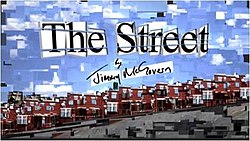
Class and Status - The Street

Class: Social classes can depend on where the citizens live and work, how much they earn and how they behave. 'Working class' and 'Middle class' contrast due to the type of jobs people in each 'class' hold. For example, Doctors are seen as 'Working class' whereas Factory workers are seen as 'Middle class'. 

Status: Depending on how high up the social scale you are, depends on what status you hold. Higher ranks or social standing shows how well respected you are in the community and how important you are to the general public.

The Street:

The fact it's called 'The Street' shows that their house isn't posh or majorly expensive, due to the fact they probably can't afford it. This shows they're a middle class family and are probably not very high on the social scale. 
At the beginning of the clip we are inside the family's house and we can see it is ordinary and not 'posh' at all. We can see the home belongs to a middle class family as there are simple furnishings and no elaborate decoration you might find in a wealthier home. The mum and dad characters are both wearing scruffy clothes, which shows they're not of a high social class either, as they're not bothered about their appearance. Throughout the house the colour blue can be found (on curtains etc) and the colour blue has connotations of sadness, which suggests they don't have an easy lifestyle where they live due to lack of money, or other problems. 
When we are introduced into the programme, the initial shot is through a gap in the door, which shows we have stumbled upon it and aren't meant to be there. The argument is not shielded fully from the children as the little girl can see and hear what's happening. Action shots are used throughout the argument to show which character is speaking, and then what the response from the other character is. Fast paced editing is used to emphasize the argument and how chaotic their lives are.
Soft music is playing the background, and this is contrapuntal as it doesn't fit the argument that is taking place. Diegetic noises of shouting can be heard, which emphasizes the fact they are angry about something and are having a serious row. 

This scene then cuts to a shot of the dad manually working with tools on a building site. He looks like a stereotypical builder, but he doesn't look like he enjoys his job due to his expression, and the fact he is using the tools in an angry way. The setting is grey in colour, and this could represent how he finds his job mundane and boring. Several jump cuts and action shots are used as we see him take his hammer down in one shot, and in the next we can see what he is hitting. His job shows he is middle class and not very well respected as a builder is a menial job, and not seen as a well paid profession. 

When the tap bursts in the kitchen, the mother is alerted to this due to the diegetic water rushing sounds that add to the scene. We then see an angle/reverse angle shot when she goes to investigate, and then a high angle shot when she is on the floor trying to battle with the burst pipe. This high angle shot shows how vulnerable she is and how she struggles with life. Fast paced editing is used to show the chaos in their lives as well as the unpredictability and daily struggle.  

The character of Peter is introduced when the kitchen tap bursts. We can see he is more professional than the husband due to the fact he is wearing a suit and tie. However, we soon find out they are lovers and she is having an affair. This tells us that they aren't of a high social class as having an affair isn't the type of thing we'd associate with posh, content marriages. They then begin to eat cake, and this adds to the idea of them being middle class and not very posh.   

Sunday, 9 September 2012

Good Cop

The character of Sav is first introduced to the audience at the beginning of the episode when he is walking down the dimly lit street. The surroundings are dark in the establishing shot and there is a faint orange glow from street lights which hints at a light/dark contrast within the character. It is also raining which adds to the dark, miserable atmosphere of the scene and gives the impression that Sav could be quite a negative person. 
He is then seen in his room with blood on his hands and a gun on his bed which makes it look like he has committed a crime and possibly shot someone. We begin to question his mental state as he rushes around frantically trying to clean everything up. He also has ripped wallpaper that could have been placed there to represent the way the character behaves and feels. 

When he meets Cassie and Libby on the beach we see a different side to him, like the contrast in the street lighting suggests. We can see he has had some previous history with the woman as he is interested in what she has to say, even though she is quite rude towards him. He keeps calm and looks upset when she walks away, which suggests he might have feelings for her. This scene represents him as a man who has made mistakes but feels bad about how things have turned out. 

Sav seems like a concerned member of the public as he goes to check she is okay, only to find the man in the toilets harassing her. We then find out Sav is actually a police officer and his badge represents the law and being a good person, so we start to think the gun and blood are all tied into his job. 
He seems genuinely concerned for the Waitress' well-being and this shows he is a nice person who is good at his job. Instead of rising to the mans threats and taunts he says "have a nice day sir" and this shows us he is smart and thinks about his actions. Although, this then makes us think about why he was so panicked in the opening scene. 

The relationship between Sav and Andy seems like a friendly one as they makes jokes and laugh with each other when they are in the cafe/diner. When he is at work in the locker rooms, he seems to have a good relationship with his co-workers as he tells them about his meeting with Cassie on the beach. They seem to know about his situation so that makes us think they are friends. In the locker scene Sav is represented as a caring, friendly person which makes us like him more. 

When dealing with the Victims and the dead baby he uses hushed voices to be considerate and doesn't know how to react because it's a terrible tragedy. He doesn't know how the baby died so he doesn't accuse anyone and tries to be rational in the situation whilst Andy, his partner, is a little bit more shocked. Sav talks to the brother of the dead baby and is represented as a helpful police officer who is just doing his job and making them feel more relaxed and less hysterical. 

Thursday, 6 September 2012

Camera Angles


Two Shot Scene depicting Sherlock Holmes (Robert Downey Jr.) and James Moriarty (Jared Harris) arguing in Sherlock Holmes: A Game of Shadows. This scene depicts the superiority of Sherlock as he is towering over James and looking down on him. It suggests he is more important and more intellectual then moriarty too.


Long shot of Hogsmeade villiage from the Harry Potter films. This has also been used as t he scenes master shot to show where the upcoming action will be set. The Long shot gives an overall view of where the film is set, as well as adding to the atmosphere of the film.


Medium shot of Katniss Everdeen (Jennifer Lawrence) in The Hunger Games, as she fills the majority of the screen it shows her strong, powerful dominant mature, and because the weapon is in full view too, it shows she is capable of inflicting pain on others. This shot also shows the viewers what she looks like.


Close up of CGI Gollum from Lord of the Rings: Fellowship of the Ring. 


The establishing shot of Pride and Prejudice showing the sunrise on the moor. 


 POV from Iron Man's helmet. Allows the viewers to get involved in the action as well as being able to see what he sees. The use of on screen robotics and images also allows the viewer to escape to a different kind of world; as well as emphasizing the nature of the film.