Attack the Block
Director: Joe Cornish
Starring: Jodie Whittaker, John Boyega
Studio: Big talk productions, film 4, studio canal, UK film council
Distributed by: Optimum releasing
Budget: £8M
Box office: £4M
Production: Shot in london, night shoots over six weeks, only 100 FX shots were used
Other Info: Play.com sells a BluRay glow in the dark sleeve edition. Distributors were worried about the American audience not understanding the British slang/accent
Soundtrack: Basement Jaxx
Kick Ass
Director: Matthew Vaughn
Starring: Aaron Johnson, Chloe Grace Moretz, Nicholas Cage
Studio: Plan B entertainment, Marv entertainment
Distributed by: Lionsgate, Universal
Budget: $30M
Box office: $90M
Production: Shot in Canada and various UK locations, adapted from the comic book that was written parallel to the films production
Other Info: Screened at the San Diego comic-con, controversy over young actors and explicit language, Rated 15 by BBFC, won awards for best actors etc
Soundtrack: The prodigy, Ellie Goulding etc
The Hunger Games
Director: Gary Ross
Starring: Jennifer Lawrence, Josh Hutcherson, Donald Sutherland, Woody Harrelson
Studio: Lionsgate, Color force
Distributed by: Lionsgate
Budget: $88M only $78M was used
Box office: $690M
Production: Shot in USA, film not digital, used less CGI to make it more realistic, propane blasts etc
Other Info: Racist comments, sold over 3.8 million DVD/BluRay copies in the first weekend of sales, DVD contains bonus features making it more appealing to buyer
Soundtrack: Score by James Newton Howard, Soundtrack has artists on such as Maroon 5 and Taylor Swift
St Trinians
Director: Oliver Parker
Starring: Rupert Everett, Gemma Arterton, Colin Firth
Studio: Ealing studios, UK film council, Fragile films
Distributed by: Entertainment film distributors
Budget: £7M
Box office: $30M
Production: VooDooDog made the cartoon pieces in the film (synergy), Filmed around the UK and London, Girls Aloud feature in the film as the school's band.
Other Info: Sequel didn't do as well, third film is scheduled to come out next year, Third most successful independent British film at the time
Soundtrack: Girls aloud, Lady Sovereign, Lily Allen etc
Prometheus
Director: Ridley Scott
Starring: Noomi Repace, Michael Fassbender, Idris Elba
Studio: Scott free productions
Distributed by: 20th Century Fox
Budget: $130M
Box office: $400M
Production: Shot in Allacante, prequel to the Alien series, filmed in 3D with the help of 3ality technica (synergy)
Other Info: people wanted less 3D in the cinema's though and more 2D showings, number one in the DVD sales charts in the first week of sale
Soundtrack: Score was played backwards and then digitally flipped to create an eerie atmosphere, written by Marc Steitenfeld
Showing posts with label Ford. Show all posts
Showing posts with label Ford. Show all posts
Monday, 7 January 2013

Sunday, 16 December 2012
UNIVERSAL STUDIOS/ PRODUCTIONS
- Universal Studios (also known as Universal Pictures), is an American motion picture studio, owned by Comcast, and one of the six major movie studios. It is one of the longest-lived motion picture studios to be located outside of Hollywood.

- Founded in 1912 by Carl Laemmle, Mark Dintenfass, Charles Baumann, Adam Kessel, Pat Powers, William Swanson, David Horsley, and Jules Brulatour, it is the oldest movie studio in the United States of America.
- The company also owns and distributes the libraries of: Five Alfred Hitchcock features originally released by Paramount, Walter Lantz Productions, Smallfilms, Focus Features' ancestors USA Films, October Films, and the 1996–1999 films by PolyGram Filmed Entertainment.

- Through subsidiary NBCUniversal Television Distribution, it owns almost all TV shows and miniseries Universal and MCA made, Almost all the pre-1950 sound features originally made by Paramount Pictures,Much of the post-1973 library of NBC's shows and made-for-TV movies.
- Via its 50% stake in StudioCanal, Universal part owns its library which consists of films (and TV Series) made by: Carolco Pictures (apart from films distributed by MGM, Warner Brothers and Universal itself), De Laurentiis Entertainment Group, Embassy Pictures (apart from films made with Polygram Filmed Entertainment, Columbia Pictures, ITC and Nepenthe Productions, along with all its television library), Alexander Salkind Productions (except films that are part of the Superman Film Series), Ealing Studios (incorporating the film library of Associated Talking Pictures), EMI Films (incorporating the film libraries of Associated British Picture Corporation, British International Pictures and British National Studios), Associated British Corporation (ABC) (including ABC shows made for Thames Television), British Lion Films (1919-1976 films only) and Anglo-Amalgamated.However Universal only owns rights to distribute the StudioCanal library in Australia, New Zealand and other areas outside North America, with StudioCanal itself distributing it in UK, Ireland, France and Germany.
Theatrical and Television Distribution:
- CBS Television Studios and Paramount Pictures (Carolco Pictures and De Laurentiis Entertainment Group)
- MGM (Embassy Pictures)
- Lionsgate (Alexander Salkind Productions, Ealing Studios, EMI Films, ABC, British Lion Films and Anglo-Amalgamated)

- Lionsgate (Embassy Pictures, Carolco Pictures, De Laurentiis Entertainment Group, Alexander Salkind Productions, Ealing Studios, EMI Films, ABC, British Lion Films and Anglo-Amalgamated)
- MGM (Embassy Pictures)
- Lionsgate (Carolco Pictures, De Laurentiis Entertainment Group, Alexander Salkind Productions, Ealing Studios, EMI Films, ABC, British Lion Films and Anglo-Amalgamate.
- Some of their most recent film distributions include Snow White and the Huntsman, Ted, The Bourne Legacy and Pitch Perfect.
- Website: http://www.universalpictures.com/
- Website: http://www.universalstudios.com/
- Albert Dorskind had envisioned a theme park and film studio in Hollywood, California. He convinced Lew Wasserman, the Chairman of the MCA, to invest $4-million in developing this particular theme that focused on Universal Motion Pictures. After numerous improvements, a branch of Universal Studios opened in Los Angeles County, California in 1964. The entertainment value it brought to the city gave an up rise to its slogan "The Entertainment Capital of LA." Since it embodies a film studio theme park, there are a lot of motion picture themes incorporated. Some films include Shrek in 4-D and Terminator 2 in 3-D. Themes from movies and television shows are integrated into the rides like The Simpsons Ride, Jurassic Park The Ride, and Revenge of the Mummy - The Ride. In April 2012, the highly anticipated Transformers: The Ride-3D was opened to the public in the theme park and is based on the hit film series Transformers.The theme park has live shows including The Special Effects Stage and Water World. It also has a carnival fun house called House of Horrors and most importantly, a studio tour that shows clips of popular movies like Jaws, Fast and the Furious, King Kong 3-D. Universal Studios Hollywood has a CityWalk which offers visitors numerous dining and shopping places

WARP FILMS
- Warp Films was established by Warp Records founding partners Rob Mitchell and Steve Beckett. It was initially created with financial support from NESTA ( National Endowment for Science, Technology and the Arts) and had a remit to produce a number of short films

- After the death of Rob Mitchell in 2001, Beckett decided to continue with Warp Films and enlisted the expertise of Sheffield friend Mark Herbert to run the company.
- The first film, Chris Morris' My Wrongs#8245-8249 & 117, was shot in 2002. It won the award for Best Short Film at the 2003 BAFTA Film Awards and became the first short film DVD single in the UK market.

- Warp Films breakout success came with Shane Meadows’ This Is England, the story of Shaun, a boy who is adopted by a local skinhead gang after his father is killed in the Falklands war. Since its release in early 2007 it has gained many awards including the Best Film at the British Independent Films Awards, the Special Jury Prize at the Rome Film Festival and Best British Film at the BAFTAs. At the same ceremony, Warp Films received its third BAFTA as Paddy Considine’s directorial debut Dog Altogether won the Best Short Film award
- Three months after This Is England was released in cinemas, Warp's third feature film, Grow Your Own, was released by Pathe. The film was Warp's first collaboration with BBC Films. The film was directed by Richard Laxton and written by Frank Cottrell Boyce and Carl Hunter, developed from stories Carl had uncovered in his documentary work about the travails of immigrants. Produced by Barry Ryan for Warp Films, Luke Alkin for BBC Films and Carl Hunter for Art in Action.
- Warp X was formally set up as Warp Xin 2005 as a low-budget digital ‘studio’ to develop and produce films with focus on new talent and commercial potential.
- In 2010, Warp Films produced Chris Morris’ debut feature Four Lions, a satirical comedy drama following a group of homegrown Islamic terrorists from Sheffield, England. The film was a critical and box office success, achieving impressive numbers at the box office on its opening weekend, generating the highest site average of all the new releases (£5,292) and making a total of £609,000. As of 8 August 2010, Four Lions grossed £2,932,366 at the UK box office. The film was nominated for two BAFTA awards; it won the ‘Outstanding Debut by a British Writer, Director, or Producer’ BAFTA award for Chris Morris.
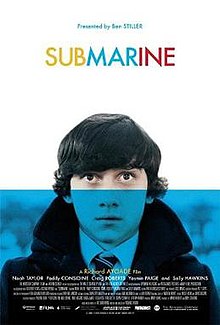
- During Richard Ayoade’s debut feature Submarine starring Noah Taylor, Sally Hawkins and Paddy Considine premiered at the Toronto International Film Festival in 2010, and was released in the UK during March 2011 by Optimum Releasing. It was distributed in the US by The Weinstein Company. The film was met with high critical acclaim, and featured original songs by Arctic Monkeys front man Alex Turner, in his first effort as a solo artist. Submarine has won many awards worldwide, including the Best Screenplay award at the 2011 British Independent Film Awards. Richard Ayoade was nominated for a BAFTA for Outstanding Debut by a British Writer, Director or Producer at the 65th British Academy Film Awards.
- Warp Films 2010 television production for Channel 4, Shane Meadows' This Is England '86, was a continuation from the 2006 film. It aired over four weekly episodes and received numerous plaudits, including a BAFTA award for leading actress Vicky McClure. It achieved record viewing figures for Channel 4
- Warp X production Kill List was released in the UK on 28 August 2011. Directed by Ben Wheatley, It has gone on to win several awards internationally, including a British Independent Film Award for supporting actor Michael Smiley. Kill List has received strong critical acclaim, with Total Film declaring it ‘Outstanding’ and giving a 5 star rating.
- Warp Films / Warp X productions, Tyrannosaur, Kill List and Submarine were nominated for a total of 18 awards at the 2011 British Independent Film Awards.
- Other notable productions: The Midnight Beast on E4 and The Minor Character on Sky (featuring David Tennant)
Wednesday, 21 November 2012
Saturday, 17 November 2012
Saturday, 3 November 2012
PROJECT PROMETHEUS
This website was created especially for the film as it built up the anticipation for the release and contained exclusive content such as videos, pictures and character information, that the fans enjoy and read to gain more information on the film and it's background.
Fans would have kept going back to the website to check for any new trailers or content on the site, and this ensured they would not lose interest in the film and go and see it when it was released.
Friday, 2 November 2012
Prometheus Twitter Campaign
Prometheus ad campaign reaches 15m Twitter users, but was it worth it?
20th Century Fox tried to tap into the viral power of Twitter on Sunday night to promote the impending release of Ridley Scott’s sci-fi movie Prometheus.In what was heralded as a world first, a new three-minute trailer for the film was screened simultaneously online, on Channel 4 and on social TV app Zeebox.
 Viewers were then encouraged to tweet about the film using the hashtag #areyouseeingthis.
During the next ad break, Channel 4 screened a 40 second spot which included viewer’s tweets.
Channel 4 said it fitted with its strategy to pioneer innovative and impactful marketing solutions, but it did it actually meet either of these criteria?
Word-of-mouth agency 1000 Heads monitored activity on Twitter around the hashtag during the past week.
The results show that there was a spike in activity on Sunday night, peaking at more than 4,000 tweets, and the hashtag was trending for a brief period.The tweets shown on screen were all positive, but this wasn't the case on Twitter.
Tuesday, 16 October 2012
Friday, 28 September 2012
KICK-ASS
 Idea:
Idea:
The idea for the Kick-Ass movie came from the comic book series written by Mark Millar. It was published by Marvel Comics and illustrated by John Romita Jr. The comic-book series is about Dave Lizewski, a teenager who sets out to become a real-life superhero and ends up by being internet famous.
Finance:
Budget: $30 million
Total income: $96,188,903
Matthew Vaughn went around, securing independent financing. But now that it’s received a positive response at Comic Con; Lionsgate, Paramount, and Universal are all making bids for distribution. The rights to a film version of the comic book were sold before the first issue of the comic book was published.Script Development:
Jane Goldman one of the screenwriters, said that when she works with Vaughn she does the "construction work" and the "interior designing" while Vaughn acts as the "architect."Vaughn: "We wrote the script and the comic at the same time so it was a very sort of collaborative, organic process. I met [Millar] at the premiere of Stardust. We got on really well. I knew who he was and what he had done but I didn't know him. He pitched me the idea. I said, 'That's great!' He then wrote a synopsis. I went, 'That's great, let's go do it now! You write the comic, I'll write the script.'"
 Seven American film studios turned down the script before Vaughn released it through his own production company. Vaughn initially went to Sony, but he rejected calls to tone down the violence.
Other studios expressed interest but wanted to make the characters - in particular studios Hit-Girl's character - into adults. Whilst studio executives said that it would be less offensive to portray Hit-Girl as a teenager, Goldman argued that it would have been more offensive since, as a teenager, Hit-Girl would have been sexualized. Goldman said that Hit-Girl was not supposed to be sexualized.
Aaron Johnson and Chloë Grace Moretz were cast as Kick-ass and Hit-Girl and a cameo from Nicholas Cage was included as the character Big Daddy.
Production:
The big studios doubted the success of an adaptation as a violent superhero, which made the film be independently financed, but this gave him the freedom to make the film the way he imagined, without having to worry about high-censorship. Vaughn believed enough in the project to raise the money himself, with the help of co-producer Brad Pitt. Christopher Mintz-Plasse, (Red Mist), said that the creators of the film were wondering whether a distributor would pick up the movie. On the set Vaughn jokingly referred to Kick-Ass as something that was going to be "the most expensive home movie I ever made."
Filming locations include Hamilton, Ontario, Canada; Dip 'N' Sip Donuts on Kingston Road in Toronto, Sir Winston Churchill Secondary Schooland "many Toronto landmarks that play cameos"; and various locations in the UK, including Elstree Studios. The opening sequence with Nicolas Cage was filmed in a sewage plant in East London.
The 2D/3D animated comic book sequence in the film took almost two years to finish. Romita created the pencils, Tom Palmer did the inks, and Dean White did the colours.
In an interview with Total Film, Aaron Johnson confirmed that the film stays true to the adult nature of the comic book series by featuring a large amount of profanity and graphic violence. It received a 15 rating from the BBFC. Director Matthew Vaughn felt the 15 certificate was about right and expressed some surprise at the film having received a "PG rating" in France.
Production companies involved in making the film were Marv films and Plan B entertainment. Distributors then included institutes such as Universal pictures, Paramount and Warner pictures.
Production companies involved in making the film were Marv films and Plan B entertainment. Distributors then included institutes such as Universal pictures, Paramount and Warner pictures.
A full company involvement list can be found here: http://www.imdb.com/title/tt1250777/companycredits
Sales:
A teaser trailer was shown and this caused some controversy because of the explicit language used by Chloe (Hit-girl). An international trailer was then released and shown around the world.

Marketing:
Posters were put up in bus stations, magazines and and trailers were shown on TV. Empire and Total Film magazine covered the film and it's journey from page to screen and film reviews are on their websites also. The film was also pitched at San Diego Comic-con and the Empire magazine Movie-Con.
Exhibition:
A premier was held in London for the film and the cast plus other guests - including Brad Pitt- arrived to promote the movie.
Kick-Ass made £3,881,704 (UK) on the opening weekend (4 April 2010) and it was shown on 402 Screens across the country.
It was shown on 5778 screens across the world on the opening weekend alone.
| All Critics | Top Critics | Audience | ||
|---|---|---|---|---|
| 76% (235 reviews) | 67% (39 reviews) | 83% (211,361 reviews) | ||
(Taken from Rotten Tomatoes/ wikipedia)
Chris Hewitt of Empire magazine gave the film 5/5 and declared it, "A ridiculously entertaining, perfectly paced, ultra-violent cinematic rush that kicks the places other movies struggle to reach.The film's violence is clearly fantastical and cartoonish and not to be taken seriously."
In an interview, Matthew Vaughn said, "There is about 18 minutes of deleted footage, which is really good stuff." The film was released on DVD and Blu-ray on 3 August 2010 in North America, selling 1.4 million copies within its first week, one-third of these in Blu-ray format. Kick-Ass debuted at number one on the DVD sales chart and the discs were released in the United Kingdom on 6 September 2010.
Other Windows:
A video game produced by WHA Entertainment and Frozen Codebase was released through the App Store on 15 April 2010. The game was released on PlayStation Network on 29 April 2010.
The film has been nominated and has won several awards for Best British film, Best newcomer and more, with Chloe Moretz winning four of them for her performance.
Kick-Ass 2
It was reported that Universal will be distributing Kick-Ass 2.
"The costumed high-school hero Kick-Ass joins with a group of normal citizens who have been inspired to fight crime in costume. Meanwhile, the Red Mist plots an act of revenge that will affect everyone Kick-Ass knows." -Synopsis

The same cast will be returning, plus a few new faces. Matthew Vaughn had chosen Jeff Wadlow, who also co-wrote the script along with Vaughn, to direct the sequel with filming planned to begin in September 2012.
Friday, 14 September 2012
Attack the Block
Director and writer: Joe Cornish
Rating: 15
Genres: Action/ Comedy/ Horror/ Sci-Fi
Release Date: 13th May 2011
Stars: Jodie Whittaker, John Boyega, Alex Esmail.
Budget: £9 million
How it was produced:
It was produced by Big Talk Productions who are known for filming, Hot Fuzz, Scott Pilgrim vs. The world and Shaun of the dead. They produced the film with the UK film council, Film4 and Studio Canal.
The 'block' was a mixture of council estates across London.
What it was based on:
Cornish was once mugged outside his home in South London and investigated the kind of kids that robbed him. He then took thay stereotype and turned it into an Alien/ Sci-Fi.

Promotion:
Posters were posted on bus stops, billboards etc. promoting the films release.
A premier was also held for the film in Leiceter Square London.
Attack the block has a website that promotes the trailer, screencaps from the film itself, and interviews with the cast and directors. http://attacktheblock.com/
The Film:
There wasn't any controversy surrounding the film as it is a comedy-horror and appealed to a "geek-friendly" crowd. It was the debut film of director Joe cornish and the cast said they enjoyed working with him.
My Review:
When i read the critic reviews of Attack The Block, i thought 'finally, another good comedy/horror to look forward to' but after watching the film i was disappointed. The reviews had told me it was 'genius' and i would 'regret not seeing it in the theater', however when i watched the film i wondered what all of the fuss was about.
I usually love Sci-Fi/Comedy/Alien films - Hot Fuzz and Shaun of the Dead are two of the best in my opinion - so i expected to really enjoy and love this film.
To begin with i felt that the film had a weak plot line as there wasn't much explanation of the events or characters. I found it hard to watch the actors on screen because i find the way they spoke to be quite cringey as i felt they were overdoing the "block" talk at times.
Throughout the film the character of Brewis (played by Luke Treadaway) made me laugh as he was so out of place with his well spoken accent and the fact he sought approval from the "block" gang.
Another aspect that made me laugh was the cameo of Nick Frost as the drug dealer, Ron. His one liners like: "Well, 'ere lads, you've discovered a species hitherto unknown to science, quite possibly non-terrestrial in origin, and you kicked it's fuckin' head in!", made me laugh, as did others throughout the film.
Rating: 15
Genres: Action/ Comedy/ Horror/ Sci-Fi
Release Date: 13th May 2011
Stars: Jodie Whittaker, John Boyega, Alex Esmail.
Budget: £9 million
How it was produced:
It was produced by Big Talk Productions who are known for filming, Hot Fuzz, Scott Pilgrim vs. The world and Shaun of the dead. They produced the film with the UK film council, Film4 and Studio Canal.
The 'block' was a mixture of council estates across London.
"We wanted to stamp a clear layout on the audience's minds early, and since we couldn't afford to show an aerial shot of the estate as it doesn't exist, the way to show it was by showing this top shot of the map at the very beginning of the film." - Director Joe Cornish.The film was shot across London from March to May 2010, with six weeks of night shoots on the Heygate Estate and various other places. Interior scene were filmed at Three Mills Studios in east London.
What it was based on:
Cornish was once mugged outside his home in South London and investigated the kind of kids that robbed him. He then took thay stereotype and turned it into an Alien/ Sci-Fi.
"Children make mistakes; they test the boundaries of the world."
Soundtrack:

The soundtrack for the film was an original score composed by Simon Ratcliffe and Felix Buxton of the popular electronic dance music group Basement Jaxx.
Promotion:
Posters were posted on bus stops, billboards etc. promoting the films release.
A premier was also held for the film in Leiceter Square London.
Attack the block has a website that promotes the trailer, screencaps from the film itself, and interviews with the cast and directors. http://attacktheblock.com/
The Film:
There wasn't any controversy surrounding the film as it is a comedy-horror and appealed to a "geek-friendly" crowd. It was the debut film of director Joe cornish and the cast said they enjoyed working with him.
My Review:
When i read the critic reviews of Attack The Block, i thought 'finally, another good comedy/horror to look forward to' but after watching the film i was disappointed. The reviews had told me it was 'genius' and i would 'regret not seeing it in the theater', however when i watched the film i wondered what all of the fuss was about.
I usually love Sci-Fi/Comedy/Alien films - Hot Fuzz and Shaun of the Dead are two of the best in my opinion - so i expected to really enjoy and love this film.
To begin with i felt that the film had a weak plot line as there wasn't much explanation of the events or characters. I found it hard to watch the actors on screen because i find the way they spoke to be quite cringey as i felt they were overdoing the "block" talk at times.
Throughout the film the character of Brewis (played by Luke Treadaway) made me laugh as he was so out of place with his well spoken accent and the fact he sought approval from the "block" gang.
Another aspect that made me laugh was the cameo of Nick Frost as the drug dealer, Ron. His one liners like: "Well, 'ere lads, you've discovered a species hitherto unknown to science, quite possibly non-terrestrial in origin, and you kicked it's fuckin' head in!", made me laugh, as did others throughout the film.
I thought the second half of the film was better than the first as I found myself getting into it more and I found myself wanting to see how it turned out in the end.
The slow motion sequence, when Moses is being chased by the aliens was good as, we could everything that was happening without it being a blur and different camera angles allowed for an exciting way to view the events. I enjoyed the on-going battle between the aliens and the kids.
Overall I would rate this film ★★★ as it is enjoyable enough but not as good as the critics had said.
The slow motion sequence, when Moses is being chased by the aliens was good as, we could everything that was happening without it being a blur and different camera angles allowed for an exciting way to view the events. I enjoyed the on-going battle between the aliens and the kids.
Overall I would rate this film ★★★ as it is enjoyable enough but not as good as the critics had said.
Wednesday, 12 September 2012
5 X 5
Top 5 Magazines
Empire - They always have good film reviews inside.
SFX - Allows me to find out about upcoming sci-fi films.
Total Film - Enjoyable to read, always have my favourite actors inside.
NME - They often cover bands i like.
Doctor Who magazine - (not Doctor who Adventures) contains all the info on episodes and characters.
Top 5 Marvel Characters
Wolverine - "Wow. Koo-koo-ka-choo got screwed." - comedy value, badass, has adamantium claws.
Charles Xavier - Played by Patrick Stewart and James McAvoy.
Iron Man/ Tony Stark - Robert Downey Jr. Stan Lee created him so we shouldn't love him, but do.
Iron Man/ Tony Stark - Robert Downey Jr. Stan Lee created him so we shouldn't love him, but do.
The Human Torch - Comedy Value, his power is quite unique.
Loki - "Kneel before me"
Top 5 TV shows
Doctor Who - "All of time and space; everywhere and anywhere; every star that ever was. Where do you want to start?"
The Vampire Diaries - Amazing plot lines and is full of beautiful people.
New Girl - Best comedy on TV.
Sherlock - Refreshing take on the books by Sir Arthur Conan Doyle.
Sherlock - Refreshing take on the books by Sir Arthur Conan Doyle.
How i Met your Mother - Barney Stintson is one of the best people ever.
5 Favourite Book series
The Hunger Games -Original, good reads, can't wait for all of the films to be released.
Divergent Trilogy - Heart-breaking but excellent Dystopian novels.
Delirium Trilogy - Heart-breaking but excellent Dystopian novels.
House of Night Saga - Fresh take on "Vampyres"
Harry Potter Series - One of the best series' around.
Top 5 bands
The Vaccines - "For goodness sake, let us be young. 'Cause time gets harder to out run"
Two Door Cinema Club - "There's a spanner in the works you know, You gotta step up your game to make to the top."
Florence + The Machine - "I must become a lion hearted girl, ready for a fight."
Panic! at the Disco - "Velvet lips and the eyes to pull me in, we both know you'd already win"
Little Comets - "I love your hands, i love your face and eyes, i love the way she only ever tells me lies."
Monday, 10 September 2012
Friday, 7 September 2012
The Film Industry
Selected Key Terms for Institutions and Audience
 An institution (in the film industry)
Definition:
Definition:
Definition:
An institution (in the film industry)Definition:
Any company or organisation that produces, distributes or exhibits films. The BBC makes films with their BBC Films arm; Channel4's Film Four produces films, Working Title also produce films, as does Vertigo Films, etc. Some institutions need to join with other institutions which distribute films. Vertigo Films is able to distribute its own films, Channel Four distributed Slumdog Millionaire through Pathe. Working Title's distribution partner is Universal, a huge US company which can make, distribute and show films. The type of owner ship within an institution matters as, for instance, Channel 4 and the BBC are able to show their own films at an earlier stage than other films made by other institutions. They are also better placed to cross-promote their in-house films within their media organisations. Use you work on Film Four as the basis for most of what you write, Moon is a good cross comparison as Duncan Jones had to create his own institution just to get the film made.
Distribution and Marketing
Definition:
Distribution and Marketing
Definition:
The business of getting films to their audiences by booking them for runs into cinemas and taking them there in vans or through digital downloads; distributors also create the marketing campaign for films producing posters, trailers, websites, organise free previews, press packs, television interviews with the "talent", sign contracts for promotions, competitions, etc. Distributors use their know-how and size to ensure that DVDs of the film end up in stores and on supermarket shelves. Distributors also obtain the BBFC certificate, and try to get films released as the most favourable times of the year for their genre, etc.
Examples:Universal distributed Working Title's The Boat That Rocked; Pathe distributedFilm4 and Celadors' Slumdog Millionaire after the original US distributor, Warner Independent went out of business. TRON was heavily marketed across a variety of mediums, Moon struggled to get press attention and Duncan Jones had to really push the film in obscure places like Popular Mechanics etc. The Kings Speech was distributed by Momentum (a susiduary of Aliance films) who are a major independent film distributor.
Exhibition
Examples:Universal distributed Working Title's The Boat That Rocked; Pathe distributedFilm4 and Celadors' Slumdog Millionaire after the original US distributor, Warner Independent went out of business. TRON was heavily marketed across a variety of mediums, Moon struggled to get press attention and Duncan Jones had to really push the film in obscure places like Popular Mechanics etc. The Kings Speech was distributed by Momentum (a susiduary of Aliance films) who are a major independent film distributor.
Exhibition
Definition:
Showing films in cinemas or on DVD. Media attention through opening nights and premieres How the audience can see the film: in cinemas, at home, on DVD, through downloads, through television, including premieres, the box office take in the opening weeks; audience reviews which includes those of the film critics, ordinary people, cinemas runs; awards in festivals, The Oscars, BAFTAS, etc.
Examples:
Slumdog Millionaire almost never got distribution. Its early US distributor, Warner Independent was a victim of the economic downturn and went out of business. The film's makers then struggled to find a distributor! Then Fox Searchlight stepped up and "the rest is history". The 8 out of 10 Oscar nomination wins ensured that the film has been the greatest British success in awards and in box office for nearly 60years.http://www.independent.co.uk/arts-entertainment/films/news/boyle-reveals-slumdog-millionaire-was-nearly-never-made-1331821.html
Initially Sony Pictures Worldwide were due to distribute the film but they specialise in straight to DVD features. Following positive reaction following its Sundance film festival the rights were acquired by Sony Classic Pictures who gave the film a limited release in the US in Cities like New York and LA.
Exchange
Definition:
Examples:
Slumdog Millionaire almost never got distribution. Its early US distributor, Warner Independent was a victim of the economic downturn and went out of business. The film's makers then struggled to find a distributor! Then Fox Searchlight stepped up and "the rest is history". The 8 out of 10 Oscar nomination wins ensured that the film has been the greatest British success in awards and in box office for nearly 60years.http://www.independent.co.uk/arts-entertainment/films/news/boyle-reveals-slumdog-millionaire-was-nearly-never-made-1331821.html
Initially Sony Pictures Worldwide were due to distribute the film but they specialise in straight to DVD features. Following positive reaction following its Sundance film festival the rights were acquired by Sony Classic Pictures who gave the film a limited release in the US in Cities like New York and LA.
Exchange
Definition:
The unintended use of an institution’s media text (i.e. a film) by OTHER PEOPLE who use the film or parts of it to form new texts. What happens to a film, etc. after the public get their hands on it using digital technology.
Examples:People unconnected to the institution/ film using WEB 2.0 applications such as YOUTUBE, Blogger, Amazon film message boards, TWITTER, Face-Book, discuss the film or edit parts of together to form a new text which the may then put a new soundtrack to and publish on YOUTUBE, etc. When you add a trailer from a site like YouTube on your blog you have been engaging with exchange. Look back to MArk Kermodes video regarding piracy and the new release strategies for films like Ken Loach's "Route Irish" (Loach has reportedly steeled himself for a frosty response from critics and anticipates an underwhelming box office, noting the difficulty he faced securing a distribution deal. Though pragmatic in his view that “people don’t make films to communicate; they make it as a commodity”,an unorthodox release strategy utilising Sky Movies Premier - which will place the film (and by extension, its subject matter) in a wider public sphere than it might otherwise have reached – suggests he hasn’t given up on pedagogy entirely.) or the Jack Ass 3 release on DVD and Sky Box Office.
Vertical and Horizontal Integration
Definition:

Examples:People unconnected to the institution/ film using WEB 2.0 applications such as YOUTUBE, Blogger, Amazon film message boards, TWITTER, Face-Book, discuss the film or edit parts of together to form a new text which the may then put a new soundtrack to and publish on YOUTUBE, etc. When you add a trailer from a site like YouTube on your blog you have been engaging with exchange. Look back to MArk Kermodes video regarding piracy and the new release strategies for films like Ken Loach's "Route Irish" (Loach has reportedly steeled himself for a frosty response from critics and anticipates an underwhelming box office, noting the difficulty he faced securing a distribution deal. Though pragmatic in his view that “people don’t make films to communicate; they make it as a commodity”,an unorthodox release strategy utilising Sky Movies Premier - which will place the film (and by extension, its subject matter) in a wider public sphere than it might otherwise have reached – suggests he hasn’t given up on pedagogy entirely.) or the Jack Ass 3 release on DVD and Sky Box Office.
Vertical and Horizontal Integration
Definition:
Absorption into a single firm of several firms involved in all aspects of a product's manufacture from raw materials to distribution.
Examples:Vivendi Universal have integrated film, music, web and distribution technology into the company, including owning big stakes in cables and wires that deliver these services. Therefore they are vertically integrated because they own all the different companies involved in film, from production to distribution to exhibition. They are also horizontally integrated because they have all the expertise for producing media content under one roof – films, TV, magazines, books, music, games thus being able to produce all the related media content for one film under the same roof (see synergy). This is important for the control the institution has over their product/film.
Synergy/Synergies
Definition:
Examples:Vivendi Universal have integrated film, music, web and distribution technology into the company, including owning big stakes in cables and wires that deliver these services. Therefore they are vertically integrated because they own all the different companies involved in film, from production to distribution to exhibition. They are also horizontally integrated because they have all the expertise for producing media content under one roof – films, TV, magazines, books, music, games thus being able to produce all the related media content for one film under the same roof (see synergy). This is important for the control the institution has over their product/film.
Synergy/Synergies
Definition:
The interaction of two or more agents (institutions/companies) to ensure a larger effect than if they acted independently. This is beneficial for each company through efficiencies in expertise and costs.
Examples:Working Title know how to make films and they have formed a business partnership with Universal, a massive US company, who have the experience and size in the marketplace (cinemas, stores, online, etc.) to distribute them. (They create the marketing campaign to target audiences through posters, trailers, create the film’s website, free previews, television and press interviews featuring “the talent”, drum up press reviews, word of mouth, and determine when a film is released for the best possible audience and the type of release: limited, wide, etc.) Channel Four’s Film 4 and Celador Films(Celador also produce Who Wants to Be A Millionaire and films, too) benefited by pooling their know-how, experience and expertise to jointly produce Slumdog Millionaire. These companies formed a business relationship with France’s Pathe to distribute this film. In the UK Pathe helped create the poster, trailer, website, etc. In the USA the film found another distributor after being nominated for the Oscars.
Viral Marketing
Definition:

Examples:Working Title know how to make films and they have formed a business partnership with Universal, a massive US company, who have the experience and size in the marketplace (cinemas, stores, online, etc.) to distribute them. (They create the marketing campaign to target audiences through posters, trailers, create the film’s website, free previews, television and press interviews featuring “the talent”, drum up press reviews, word of mouth, and determine when a film is released for the best possible audience and the type of release: limited, wide, etc.) Channel Four’s Film 4 and Celador Films(Celador also produce Who Wants to Be A Millionaire and films, too) benefited by pooling their know-how, experience and expertise to jointly produce Slumdog Millionaire. These companies formed a business relationship with France’s Pathe to distribute this film. In the UK Pathe helped create the poster, trailer, website, etc. In the USA the film found another distributor after being nominated for the Oscars.
Viral Marketing
Definition:
A marketing technique aiming at reproducing "word of mouth" usually on the internet and through existing social networks. YouTube Video pastiches, trailers, interviews with cast members, the director, writer, etc. You can find interviews of “the talent” trying to gain publicity for your case study films on YouTube. Find some clips from the films we have studied to help you in the exam. Guerilla Marketing.The use of unconventional and low cost marketing strategies to raise awareness of a product. The aim is usually to create “buzz” and “word of mouth” around a film. Unusual stunts to gain publicity (P.R.) on the film’s opening weekend, etc.
Examples:Sasha Baron Cohen created “buzz” before the release of his film “Borat” by holding fake press conferences. The studio also accessed the popularity of YouTube by releasing the first 4 minutes of the movie on YouTube, a week before it’s release, which can then be sent virally across the nation. At a special viewing of “Bruno” Cohen landed on Eminem “butt first” from the roof MTV Awards venue, dressed in as an angel outfit with rents in the rear end.
Media Convergence
Examples:Sasha Baron Cohen created “buzz” before the release of his film “Borat” by holding fake press conferences. The studio also accessed the popularity of YouTube by releasing the first 4 minutes of the movie on YouTube, a week before it’s release, which can then be sent virally across the nation. At a special viewing of “Bruno” Cohen landed on Eminem “butt first” from the roof MTV Awards venue, dressed in as an angel outfit with rents in the rear end.
Media Convergence
Definition:
Convergence of media occurs when multiple products come together to form one product with the advantages of all of them.
Examples:More and more films are being marketed on the Internet and on mobile phones. You no longer need even to buy the DVDs or CDs as you can download films and music directly to your laptop, Mac or PC. Blue Ray DVDs can carry more features than ordinary DVDs and can be played on HD televisions and in home cinemas for enhanced/cinematic picture quality. You can save films on SKY digital, Free-box digital players, etc. You mobile phone has multiple features and applications. With media and technological convergence this is growing year on year. Play-Stations, X-Boxes and the Wii can can connect with the Internet and you can play video games with multiple players.
Technological Convergence
Examples:More and more films are being marketed on the Internet and on mobile phones. You no longer need even to buy the DVDs or CDs as you can download films and music directly to your laptop, Mac or PC. Blue Ray DVDs can carry more features than ordinary DVDs and can be played on HD televisions and in home cinemas for enhanced/cinematic picture quality. You can save films on SKY digital, Free-box digital players, etc. You mobile phone has multiple features and applications. With media and technological convergence this is growing year on year. Play-Stations, X-Boxes and the Wii can can connect with the Internet and you can play video games with multiple players.
Technological Convergence
Definition:
The growing interractive use of digital technology in the film industry and media which enables people to share, consume and produce media that was difficult or impossible just a few years earlier.
Examples:For instance, the use of new software to add special effects in editing; the use of blue-screen; using new types of digital cameras like the one Danny Boyle used in “Slumdog Millionaire” (The Silicon Imaging Camera to shoot high quality film in tight spaces); you can use the Internet to download a film rather than go see it in the cinema; you can watch it on YouTube; you can use special editing programs like Final Cut Pro to edit bits of a film, give it new soundtrack and upload it on YouTube; you can produce illegal, pirate copies on DVDs from downloads and by converting the film’s format; you can buy Blue Ray DVDs with greater compression which allows superior viewing and more features on the DVD; distributors can use digital software to create high concept posters; cinemas can download films to their projection screens and do not have to depend on a van dropping off the film! The is also the Digital Screen Network. There are tons of ways in which technological convergence affects the production, distribution, exhibition and exchange by prosumers. ( A prosumer is someone who not only consumes (watches films) but also writes about them the Net, blogs and make films out of them, often uploading them on sites like YouTube, etc.
A Mainstream Film
Definition:
Examples:For instance, the use of new software to add special effects in editing; the use of blue-screen; using new types of digital cameras like the one Danny Boyle used in “Slumdog Millionaire” (The Silicon Imaging Camera to shoot high quality film in tight spaces); you can use the Internet to download a film rather than go see it in the cinema; you can watch it on YouTube; you can use special editing programs like Final Cut Pro to edit bits of a film, give it new soundtrack and upload it on YouTube; you can produce illegal, pirate copies on DVDs from downloads and by converting the film’s format; you can buy Blue Ray DVDs with greater compression which allows superior viewing and more features on the DVD; distributors can use digital software to create high concept posters; cinemas can download films to their projection screens and do not have to depend on a van dropping off the film! The is also the Digital Screen Network. There are tons of ways in which technological convergence affects the production, distribution, exhibition and exchange by prosumers. ( A prosumer is someone who not only consumes (watches films) but also writes about them the Net, blogs and make films out of them, often uploading them on sites like YouTube, etc.
A Mainstream Film
Definition:
A high budget film that would appeal to most segments of an audience: the young, boys, girls, teenagers, young people, the middle aged, older people, the various classes in society. Distributors often spend as much or more than the film cost to make when distributing mainstream films that are given wide or universal releases.
Examples:
Examples:
The Boat That Rocked was a mainstream idea and was given the mainstream treatment on wide release. The film flopped at the UK box office on release ( and has not done too well since mid November 2009 on release in the USA. This was mostly because of its poor reviews, particularly from “Time-Out”. However, when young and older audiences see the DVD they generally like the film because of its uplifting storyline and the well-chosen soundtrack.
Art House Films
Definition:
Art House Films
Definition:
A low budget independent film that would mostly appeal to an educated, higher class audience who follow unusual genres or like cult directors that few people have heard of. Therefore it is usually aimed at a niche market. Foreign films often come under this category.
Examples: The low budget film, Once (2007) which found a specialised, boutique distributor in Fox Searchlight fits this label. (FOX the mainstream company usually distributes big budget film and blockbusters); So does “Juno” from 2008 which began as a low budget film about teenage pregnancy that the big studios thought too risky to touch – but it found popularity through its touching storyline, engaging music and its Oscar nomination for best script. Like “Slumdog Millionaire” the film crossed over between art-house cinemas and audiences to mainstream ones because of the recognition it received from Canadian film festivals and award ceremonies like Britain’s BAFTAS and the Hollywood’s Oscars.
Ratings bodies BBFC - The British Board of Film Classification:
Examples: The low budget film, Once (2007) which found a specialised, boutique distributor in Fox Searchlight fits this label. (FOX the mainstream company usually distributes big budget film and blockbusters); So does “Juno” from 2008 which began as a low budget film about teenage pregnancy that the big studios thought too risky to touch – but it found popularity through its touching storyline, engaging music and its Oscar nomination for best script. Like “Slumdog Millionaire” the film crossed over between art-house cinemas and audiences to mainstream ones because of the recognition it received from Canadian film festivals and award ceremonies like Britain’s BAFTAS and the Hollywood’s Oscars.

Ratings bodies BBFC - The British Board of Film Classification:
How your institutions films are rated will affect audiences in so far as WHO can see them. Remember that sex scenes, offensive language, excessive violence, the use of profanity, etc. can affect the rating and certificate the film receives and therefore affect who is able to see the film.
Friday, 31 August 2012
The Amazing Spiderman:

I went to see The Amazing Spiderman, to see how it compared to the original trilogy. Even though i enjoyed the original trilogy; i thought i'd enjoy this film too as it's newer and has a new cast - including Andrew Garfield. Also, i knew it would be good due to the fact it is produced by Marvel and based on the original comic books.
I really enjoyed the film, although i'm not sure i prefered it to the original trilogy and vice versa. I thought the use of CGI was good when it came to 'The Lizard' and i enjoyed the variation in characters and the plot. Although, i'm not sure this reboot was worth it because 'the untold story' wasn't that surprising.
Specification
Section B: Institutions and Audiences
Candidates should be prepared to understand and discuss the processes of production, distribution, marketing and exchange as they relate to contemporary media institutions, as well as the nature of audience consumption and the relationships between audiences and institutions. In addition, candidates should be familiar with:
• The issues raised by media ownership in contemporary media practice;
• The importance of cross media convergence and synergy in production, distribution and marketing;
• The technologies that have been introduced in recent years at the levels of production, distribution, marketing and exchange;
• The significance of proliferation in hardware and content for institutions and audiences;
• The importance of technological convergence for institutions and audiences;
• The issues raised in the targeting of national and local audiences (specifically, British) by international or global institutions;
• The ways in which the candidates’ own experiences of media consumption illustrate wider patterns and trends of audience behaviour.
This unit should be approached through contemporary examples in the form of case studies based upon one of the specified media areas. See explanations below.
The Exam Board will select one concept to devise a question for the exam.
Candidates should be prepared to understand and discuss the processes of production, distribution, marketing and exchange as they relate to contemporary media institutions, as well as the nature of audience consumption and the relationships between audiences and institutions. In addition, candidates should be familiar with:
• The issues raised by media ownership in contemporary (current) media practice:
The depth and range of ownership across a range of media and the consequences of this ownership for audiences in terms of the genres and budgets for films. How for instance, can Channel4's Film4 survive in the British market place against the high concept, big-budget films made by Newcorp's FOX, Warner Bros, Disney, Universal, etc.? What kinds of niche audiences are left for Film4 to attract? Are mass audiences out of reach given the genres of films Film4 have the budgets to make? How successful have they been in reaching mass audiences with their films? How healthy is it that just a few mega media groups can own such a range of media and can decide what the public may see, and, perhaps, shape audience's tastes?
• The importance of cross media convergence and synergy in production, distribution and marketing:
Digital technology is enabling various media to converge in hubs, platforms and devices. For instance, mobiles phones do a lot more than act as hand held telephones: you can download and watch films and TV programmes, use them as alarm clocks, watches, play music on them, take photos and short films, text, go online, use GPS functions, a range of apps, and a whole lot more. New HD TVs, Playstations, X-Boxes, I-Pads, Notebooks, MacBooks, etc. are also examples of hubs which in which a variety of media technologies can converge for convenience for users. Media convergence is having an enormous impact on the film industry because of the ways in which institutions can produce and market for audiences/users on a widening range of platforms, capable of receiving their films.
Synergies can come out of an organisation's size; smaller media organisations such as Channel4 can-cross promote their films, etc. but the scale of cross-media promotion is nowhere near as great as that which can be gained by massive media organisations. Film4 is therefore unable to promote their lower budget films on a level playing field.
• The technologies that have been introduced in recent years at the levels of production, distribution, marketing and exchange:
The audience's ability to interact with films by, for instance, using digital technology to put extracts on You Tube and overlay new sound tracks on them, etc. and make answering videos has been greatly enhanced by Web 2.0; Film studios can make films using CGI, greenscreen and other special effects that were impossible to make only a few years ago. The ways of filming and editing films have changed, too, with the introduction of digital film and film cameras, editing software, laptops, digital projectors, etc. Distributors market films using the latest software for designing high-concept film posters and trailers. They can use phone apps., online marketing, Face Book, etc. File-sharing and piracy are growing issues because the software exists to take the protective encryption of DVDs, etc and WEB 2.0 enables people to make and share copies of films easily. One way in which film companies are trying to get around this is by releasing films soon after theatrical release by selling them on video-on-demand, premium TV channels and downloads. US and UK cinemas chains are not happy about this, especially after all the investment some have made on digital equipment, projectors, etc. which unfortunately quickly goes very quickly out of date!
• The significance of proliferation in hardware and content for institutions and audiences:
This means the increase of something: i.e. digital cameras, software, CGI, 3D films, film genres, etc. which are part of current trends; how significant is this for See Saw Films or Film4? Or are they still able to be successful without it by making films with genres that do not need the latest breakthroughs in digital technology? Research the film company's use of cameras, special effects, software, posters, digital distribution of films, etc.
• The importance of technological convergence for institutions and audiences:
This is a WEB 2.0 issue and how technology is coming together in hubs like laptops is one of the features of our age; the mobile phone in your pocket is a great example of technological convergence: it can do so much more than a simple phone call; think how this is affecting film making at the production, marketing and exhibition stages? The Internet is acting as a hub for many aspects of film: you will find film posters, You Tube videos on films, interviews, trailers, official film and blog websites, etc. on it. Audiences can also remake their own films by creating extracts and running new scores over them and then posting them on You Tube. This often leads to answering videos, never mind the comments, etc. that people make on such sites. The internet, film and videos games seems to be converging in so many ways. People can watch films in a range of ways, using an astonishing range of hardware and software. They can also find audiences of their own. This amounts to free publicity for film institutions for their films and "A Long Tail" sales into the future through endless exchange.
• The issues raised in the targeting of national and local audiences (specifically, British) by international or global institutions:
"Slumdog Millionaire" was originally aimed at Asian audiences living in various parts of the UK and also at Danny Boyle fans. The film's unexpected success at film festivals and being nominated for the Oscars led to another theatrical release and a crossover from the "indy" art-house into the mainstream. British film makers often make social realism films and aim them at local and regional audiences whereas this would never be enough for the major media players who tend to make high budget, high concept films. They have boutique offshoots who make and often distribute lower budget films, aimed at more high brow audiences. Disney's Mirimax and Fox's Fox Searchlight are examples of such boutique, art-house film distribution.
• The ways in which the candidates’ own experiences of media consumption illustrate wider patterns and trends of audience behavior:
How you consume films whether it is as a social activity after visiting a shopping centre or on an MP4 player or Playstation, is what is at issue here. Visit Pearl and Dean to see how multiplex cinemas are adapting the experience of cinema-going to gain audiences. In an age of falling DVD sales, home cinema and an increase in downloading for both music and film audiences are changing in how they want to consume film. Identify trends and consider where the audience trends are going in the near future.
This unit should be approached through contemporary (up-to-date) examples in the form of case studies based upon one of the specified media areas.
Subscribe to:
Posts (Atom)